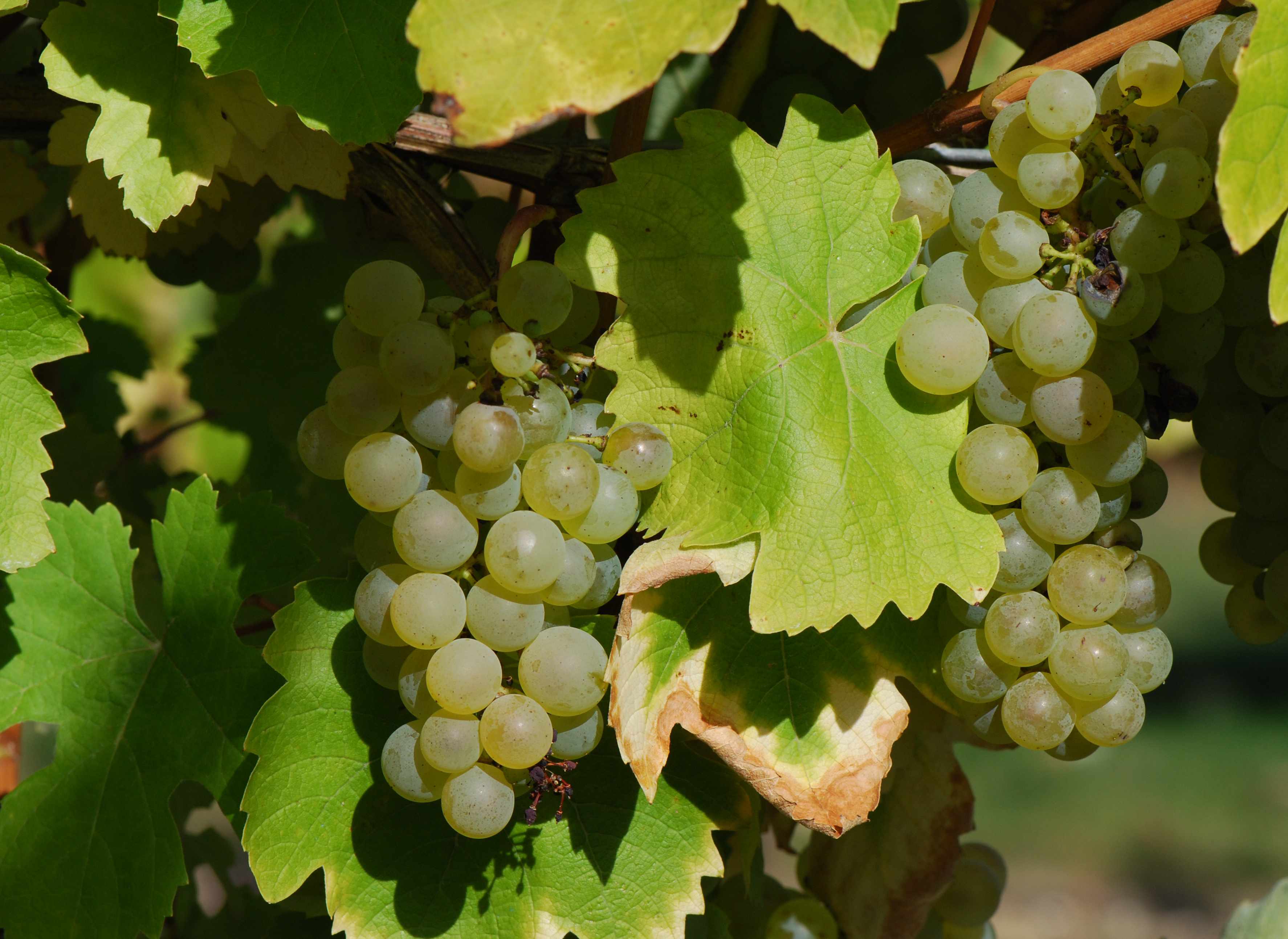
Fungal diseases account for the largest share of crop protection costs in French viticulture. The three principal threats — downy mildew (Plasmopara viticola), powdery mildew (Erysiphe necator, also called oidium), and grey mould (Botrytis cinerea) — each have distinct biology, seasonal dynamics, and management requirements. Misjudging the intervention window for any of them can result in significant yield loss or quality degradation.
Downy Mildew — Plasmopara viticola
Downy mildew is an oomycete, not a true fungus, but is managed as part of plant protection programmes. It was introduced to Europe from North America in the 1870s and remains the most damaging foliar pathogen across Atlantic-influenced French wine regions: Bordeaux, Loire, and the wetter areas of Languedoc.
Infection conditions
Primary infections (from overwintering oospores in the soil) occur when three conditions align: shoots have reached at least 10 cm in length, night temperatures exceed 12 °C, and there has been at least 10 mm of rainfall within 48 hours. This "rule of 3×10" is a widely referenced field heuristic, though regional models such as Milvit (used in Bordeaux) and the Grapevine model from IFV provide more refined risk calculation based on leaf wetness duration and temperature.
Symptoms and affected tissues
On leaves, the first sign is a pale yellow oil spot on the upper surface, with a white downy sporulation on the underside in humid conditions. Inflorescences and young berries are particularly vulnerable during flowering and fruit set. Berry infections post-véraison (colour change) typically present as brown, leathery fruit — "brown rot" or cuir — without the white sporulation seen on green tissue.
The IFV maintains a disease alert network (BSV — Bulletin de Santé du Végétal) updated weekly during the growing season. BSV bulletins are publicly available through regional DRAAF (Direction Régionale de l'Alimentation, de l'Agriculture et de la Forêt) websites.
Powdery Mildew (Oidium) — Erysiphe necator
Unlike downy mildew, powdery mildew thrives in dry, warm conditions with moderate temperatures (optimum around 25–28 °C) and does not require free water on leaf surfaces to sporulate. It is a particular threat in continental and Mediterranean-influenced regions: southern Rhône, Provence, Alsace, and parts of Burgundy during dry springs.
Development pattern
The pathogen overwinters in dormant buds or as chasmothecia (sexual fruiting bodies) on vine bark. Infected buds produce shoots with a characteristic white powdery mycelium from very early in the season. Secondary spread by wind-dispersed conidia accelerates as temperatures rise and canopy density increases.
The critical protection window runs from bud burst to three to four weeks after flowering. Infections during this period can cause berry skin cracking later in the season, which in turn creates Botrytis entry points in tight-clustered varieties such as Grenache, Muscat, and Sauvignon Blanc.

The rose as a sentinel plant
The traditional practice of planting roses at the ends of vineyard rows (visible in the photograph above) has an agronomic basis: roses are susceptible to both powdery mildew and black spot, and symptoms tend to appear on roses slightly ahead of their onset in the vineyard. While modern forecasting models have largely replaced this observation-based monitoring, the roses remain a useful visual indicator and their historical function is recognised by several French appellations in their cultural heritage documentation.
Grey Mould — Botrytis cinerea
Botrytis cinerea is a necrotrophic fungus present across all French wine regions. Its agronomic impact ranges from destructive (grey rot, reducing yield and quality) to beneficial in very specific conditions (noble rot, or pourriture noble, exploited for the production of Sauternes, Monbazillac, and certain Alsatian late-harvest wines).
Risk factors
Botrytis risk is elevated by several interacting factors: dense canopies that trap humidity, tight grape clusters that prevent airflow between berries, varieties with thin skins (Pinot Noir, Muscat à Petits Grains), wounds from powdery mildew cracking or grape berry moth (Lobesia botrana) damage, and wet conditions during ripening. The Gironde appellation's technical services document consistent Botrytis pressure on Merlot in years with late August rainfall above 60 mm.
Cultural controls
Canopy management during summer is the primary preventive tool. Leaf removal in the bunch zone, typically carried out one to three weeks before flowering (or immediately after in wetter years), improves airflow, reduces humidity at cluster level, and exposes fruit to UV radiation, which is hostile to Botrytis spore germination. This practice is documented in IFV technical sheets as reducing grey rot incidence by a measurable margin in susceptible varieties, though exact figures vary significantly by year and variety.
In Sauternes and Barsac, the deliberate induction of noble rot requires very specific conditions: morning mist from the Ciron river followed by dry afternoon sun. Growers monitor botrytis development with daily plot inspections during the harvest window and carry out multiple selective harvests (tries successives) — in some years, three to six passages through the vineyard.
Integrated Management Considerations
French viticulture operates under increasingly strict product use regulations. The EcoPhyto plan (launched in 2008 and revised subsequently) set targets for reducing pesticide use (expressed in Treatment Frequency Index, IFT — Indice de Fréquence de Traitement). Progress has been variable: viticulture, which covers approximately 3% of French agricultural surface, historically accounted for a disproportionate share of pesticide use. Pressure to reduce treatment frequency has accelerated interest in forecasting-based approaches and disease-tolerant varieties.
Copper, permitted in organic viticulture as a contact fungicide against downy mildew, is restricted to a maximum of 4 kg of pure copper per hectare per year under EU regulation (Commission Regulation (EU) 2018/1981). This ceiling creates a genuine constraint in years with high and prolonged mildew pressure, and has prompted research into reduced-dose programmes combined with other permitted products.
Sources and references
- IFV — Institut Français de la Vigne et du Vin — BSV bulletins and technical sheets
- INRAE — INRAE Bordeaux-Nouvelle-Aquitaine — oomycete and Botrytis research
- EcoPhyto — agriculture.gouv.fr/ecophyto
- European Commission Regulation (EU) 2018/1981 on copper use in organic farming
- DRAAF — Regional plant health bulletins (BSV Vigne), available via regional DRAAF portals