
Soil management in viticulture involves decisions that compound over decades. The inter-row management system — whether to till, to maintain a permanent cover, or to alternate between the two — shapes soil structure, microbial activity, water infiltration, erosion risk, vine vigour, and ultimately the expression of each terroir. In France, where the concept of terroir is legally embedded in the AOC system, soil stewardship is inseparable from appellation identity.
Soil Types Across French Wine Regions
The diversity of French viticultural soils is considerable. Burgundy's Côte-d'Or vineyards rest on shallow clay-limestone (argilo-calcaire) profiles over Jurassic limestone bedrock. Bordeaux's left bank (Médoc, Graves) is characterised by deep gravel deposits over clay subsoils, while the right bank (Saint-Émilion, Pomerol) has heavier clay and limestone terraces. In the Loire, the soils range from the schist and volcanic tuff of the Anjou-Saumur to the silex-rich soils of Pouilly-Fumé. The southern Rhône's galets roulés (large rounded pebbles) at Châteauneuf-du-Pape act as heat reservoirs, while Alsace's complex geology produces soils varying from granite to marl within short distances.
Each of these profiles responds differently to management interventions. What reduces erosion effectively on a steep Côte-Rôtie slope causes unwanted competition on a deep, water-retentive Pomerol clay.
Mechanical Tillage
Tillage in the vine row and inter-row was the dominant practice throughout most of the twentieth century in France. Regular passes with a disc harrow or rotovator control weeds, break compacted surface layers, improve immediate water infiltration by eliminating sealed crusts (battance), and incorporate organic residues. The under-vine strip, where tractor wheels cannot reach without specialised equipment, is often worked with manual tools or inter-vine tools (décavaillonneurs) that swing under the vine on an automatic detection system.
The primary disadvantages of intensive tillage are the destruction of soil structure over time, the reduction of earthworm populations and mycorrhizal networks, and the risk of erosion on slopes. On the steep terraced vineyards of the Côte-d'Or, regular tillage of both rows and inter-rows has historically caused measurable soil loss, washing the thin, precious limestone-rich upper horizon down gradient.
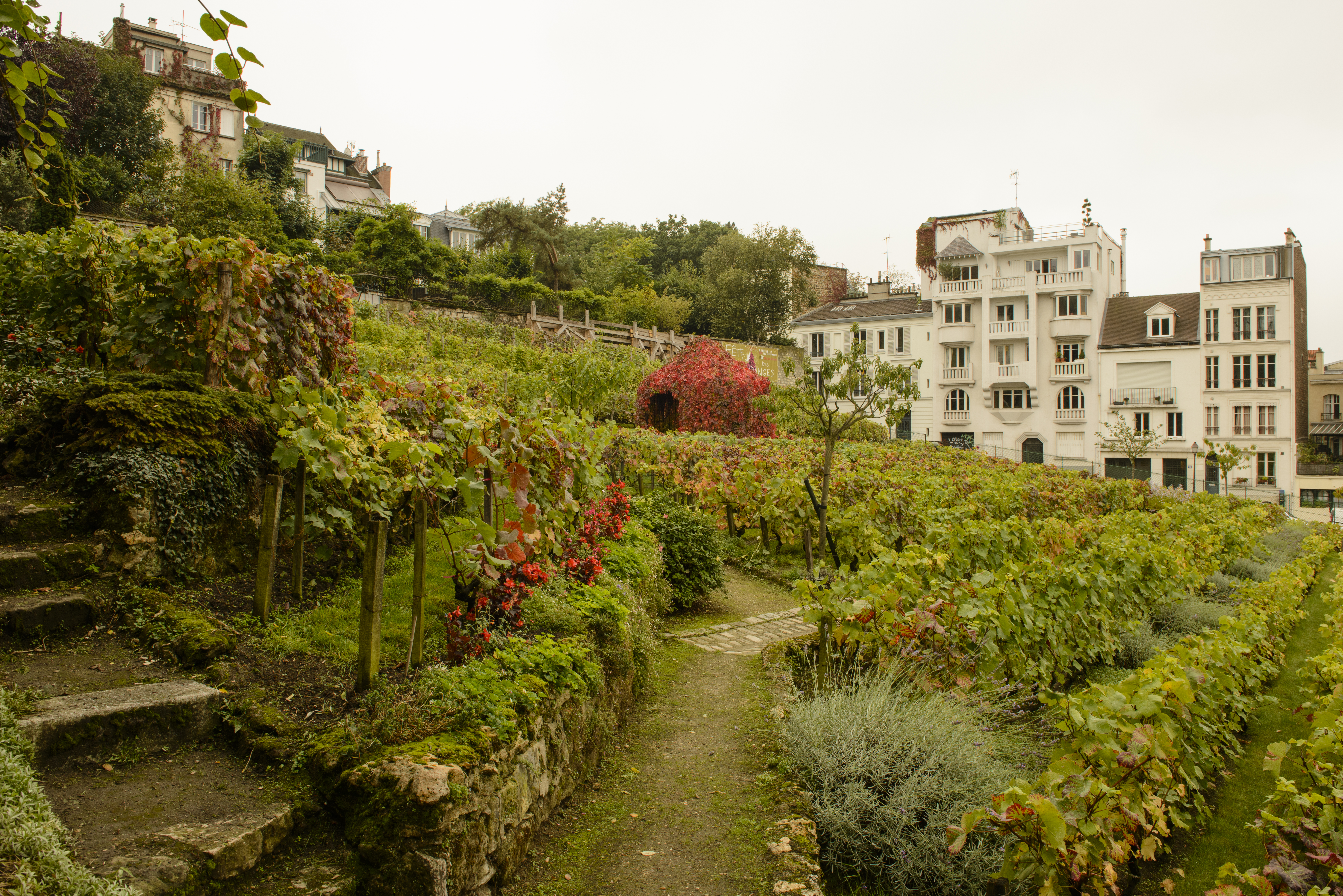
Cover Crops and Permanent Grass
Permanent or temporary inter-row vegetation is now widespread across French viticulture, driven by both environmental regulation and quality considerations. The approach varies in intensity:
Permanent grass cover (engazonnement permanent)
Maintaining grass between every row provides year-round soil cover, eliminates erosion risk, and supports a diverse soil biology. On steep slopes — Mâcon, northern Rhône, Alsace — permanent grass is the principal tool against runoff. The competition from grass for water and nitrogen is used deliberately in high-vigour situations: on deep fertile soils in the Loire or Languedoc, controlled grassing reduces excessive shoot growth and concentrates vine resources towards the fruit.
Alternating cover (engazonnement un rang sur deux)
Covering alternate rows with grass while leaving adjacent rows tilled or kept weed-free with herbicides (or mechanical inter-row cultivation) allows vignerons to balance erosion protection against vine competition. This is a common compromise in Bordeaux, where some plots have sufficient soil depth and water availability to tolerate some competition in wetter years but not in drought years.
Temporary cover crops
Annual cover crops sown after harvest and terminated before spring provide biomass for incorporation, fix nitrogen (if legumes are included), and improve soil porosity through root channels. Phacelia, mustard, vetch, and clover mixes are the most commonly used. Some vignerons in the Beaujolais and Côtes du Rhône générique appellations use rolled-and-crimped cover crops as mulch, avoiding both tillage and herbicide use while maintaining soil moisture under the mulch layer.
The INRAE research unit in Avignon (Unité Agroécologie et Environnement) has published comparative studies on inter-row management systems in southern French vineyards. Their publicly accessible research covers soil carbon dynamics, earthworm activity, and vine water status under different cover crop regimes.
Organic Matter and Compost Applications
Vineyards are typically low in organic matter: continuous cropping of a perennial with little above-ground biomass returned to the soil, combined with decades of tillage, depletes organic carbon over time. In Burgundy, some premier cru and grand cru plots on the Côte-d'Or that were analysed in the late twentieth century showed organic matter levels below 1.5%, considered critically low for biological activity.
Compost applications — from grape marc (marcs de raisin), vine pruning wood chipped and composted, or farm livestock manure where available — are the primary input for rebuilding organic matter. The application rate and frequency vary: in biodynamic estates, composted preparations are applied at lower quantities with greater frequency and precision. In conventional viticulture, composts are often applied every three to five years at rates of 10–20 tonnes per hectare.
Under French regulations, imported composts and organic amendments used in viticulture must comply with NFU 44-051 (the standard governing soil conditioners and organic fertilisers), which limits contamination by heavy metals and defines minimum nutrient content labelling requirements.
Under-Vine Weed Management
The strip directly under the vine is the most contested zone in vineyard soil management. Root competition here is strongest, and weed growth can significantly affect vine vigour — particularly in young vineyards or in dry years. Three main approaches are used across France:
- Herbicide application — still widespread in conventional viticulture, though subject to increasing regulatory restrictions. Glyphosate use has been debated in France for many years; its permitted status changes periodically.
- Mechanical under-vine cultivation — using inter-vine tools that navigate around vine trunks. These are effective but require skilled operation and repeated passes during the growing season.
- Mulching — wood chip or straw mulch applied under the vine suppresses weeds, retains moisture, and gradually adds organic matter. It is common in biodynamic and organic estates and is gaining adoption in conventional viticulture in drier areas.
Erosion Control on Slopes
Slope erosion is a documented problem in several French appellations. In Bandol (Provence), the steep terraced vineyards have historically experienced significant soil loss during autumn storms. In the northern Rhône's Côte-Rôtie and Condrieu, winegrowers have had to restore soil manually on the steepest granite slopes. The Chambre d'Agriculture du Rhône and regional wine councils have worked with vignerons on combined approaches: stone wall maintenance, grass in every inter-row, and strategic positioning of water flow channels to reduce concentrated runoff.
Sources and references
- INRAE — inrae.fr — soil carbon and cover crop research in French viticulture
- IFV — vignevin.com — inter-row management technical sheets
- Chambre d'Agriculture du Rhône — rhone.chambagri.fr
- AFNOR NFU 44-051 — French standard for soil conditioners and organic fertilisers
- Agence Française pour la Biodiversité — soil biodiversity references in viticultural contexts


